
 Share on bsky
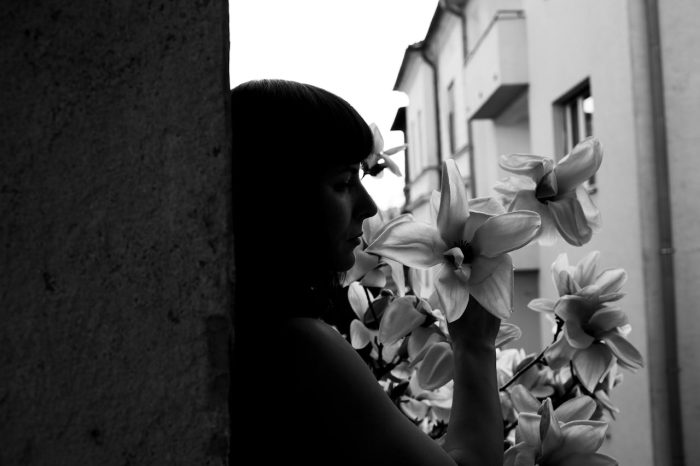
“The cry we hear from deep in our hearts comes from the wounded child within. Healing this inner child’s pain is the key to transforming anger, sadness and fear.” ~ JenElizabethJournals
~
I know some people will read this and scoff.
They will roll their eyes, mouthing the words “woo woo.” They will dismiss and judge. They will believe it’s nonsense. All the while closing themselves off further, displaying their inability to open their mind and develop a sliver of self-awareness. They will not even be able to recognise their cognitive bias.
We still have a lot of work to do in this space and I don’t think it’s given nearly enough focus in therapy, when dealing with belief patterns, behaviours, and generational cycles.
Inner child work is not about blame. It’s not about blaming our parents. It’s not about justifying poor behaviour. It’s about identifying where our triggers are coming from. Why we react the way we do in certain situations. It’s about addressing our underlying fears, anger, and sadness. It’s about understanding that the adult we are is still so often driven by the childhood experiences we lived through. It’s nurturing that child within us so we can become the best version of ourselves.
Here’s the thing. Our belief system is generally formed by age seven. Yes, you heard correctly, age seven. And if we have formed unhealthy or limiting beliefs in this time period, we carry those into adulthood. Think of the child whose parents are struggling in their relationship so they are distracted and inadvertently emotionally unavailable; they may form a belief that they are invisible or not enough and go through life desperately seeking attention.
What about the child whose feelings are consistently invalidated? They will likely form a belief that their feelings don’t matter and forever search for validation. Or the child born into conflict who learns to people please, never having good boundaries.
What about the child who is constantly let down, where a parent breaks a promise or goes back on their word? They learn to distrust. Or where a child is taught to fear a parent as a means of discipline? That child will likely carry a belief that children are less valued and should fear those in authority.
See the trend here? The truth is most of us will not come out unscathed, but we can do that work on ourselves to change those beliefs and heal any hurts we may have.
We carry all sorts of beliefs as we grow into adults. Sometimes we become aware of those we need to change, and other times we move through life never understanding why we feel the way we do. Why relationships are difficult. And when things don’t go to plan, we blame others. We judge others. We project all our fears, anger, disappointment, and insecurities onto others because self-reflection and accountability are difficult when you lack any self-awareness. They are also difficult when you are functioning from a belief system set up before the age of seven and are behaving and reacting from the child within rather than the grown adult you now are.
Think of a little box inside yourself that holds all the things you’ve experienced from conception. In that box are all the painful things. The losses. The fears. The anxieties. This box is jammed tightly shut, but it leaks every day and seeps through every cell of our being. Our conscious awareness forms only about 10 percent and our unconscious mind forms about 90 percent, meaning we are driven by the unconscious mind. We are driven by that locked little box inside ourselves. We are functioning on autopilot most of the time, without a clue of what is fuelling the engine.
So how can these beliefs affect us?
It’s simple yet complex. We are sponges as kids and it doesn’t take much to leave an imprint on our developing mind.
When I was a little girl, something was said to me that affected me up until I addressed it a few years back. It was a distant memory I had, but I had no clue the impact those words had on me. My mum brought me this pink cowgirl dress and little white boots. The dress had these fancy beads around the neckline and the dress fell to my knees with white tassels. How I loved that dress. I still remember putting it on and looking in the mirror thinking how pretty it was. I felt grown up and was so excited to go and visit my grandparents, wearing this new ensemble. I couldn’t wait to arrive and show off my outfit.
Upon walking into my grandparents home, another relative was there, one we didn’t like much, as he was always grumpy. He took one look at me and said, “You look like a slut in that dress, you deserve to be raped.” I didn’t understand those words, but I understood the anger on my dad’s face as he launched at him. I understood that I had done something terribly wrong and I felt immense shame. I was seven years old, and I never wore that dress again.
I understand as an adult that he was just an asshole and those words were a reflection of the type of man he was and not of me and my little pink cowgirl dress, but those words stung seven-year-old me, not because I understood what he was saying but because I knew he was saying something bad about my dress. I knew he was saying something bad about me. I knew he was blaming me for something. I took his behaviour and turned it into my shame, because this is what we do as kids.
And the worst part is those words have affected me most of my life. They affected the way I saw myself. That shame was triggered every time I was wolf-whistled at or inappropriately hit on. I held a belief that how I dressed determined who I was and if men reacted in these types of ways, it was my fault because I was wearing or doing something wrong, and sadly, society propagates this idea. Look how rape victims are treated. I also became a huge people pleaser and avoided conflict at all costs. The issue is that I had no idea this incident all those years ago was still playing out in my adult life.
Here’s the thing. We don’t know what we don’t know. We can’t change something that we have no idea is impacting us. We are all running around on autopilot, with that unconscious box of past events defining our actions, reactions, behaviours, and emotions. But we can change the unconscious to the conscious with work. But we need to acknowledge that we have parts of ourselves that need work. We need to understand that we hold beliefs that may have been helpful when we were kids but are no longer helpful. We need to realise we can change, if we choose to do so. That if we are feeling judgmental and feel the need to put another person down, where is that coming from? Why are we behaving that way?
We have a society in desperate need of therapy and inner child work. From the United States President, down to every person who writes a nasty, judgmental, abusive comment to a stranger on social media. Happy, well-adjusted people, with even a smidge of self-awareness do not behave this way. Red pill culture is filled with hurt little boys who didn’t have their needs met as kids, in grown men’s bodies. Running around blaming women. Spewing their hatred out into the world. It’s toxic. Sad and dangerous. And it’s the grown up version of a toddler tantrum with potential dire consequences.
We humans are a product of our environment. We learn what we are modelled. We carry our unhealed wounds. We continue cycles and patterns. We are reactive from those triggers deep within. We grow into adults who revert to the wounded child when a hurt or fear has been provoked. And the tragedy is some will live this way forever.
Imagine recognising your patterns. Understanding those triggers. Questioning those behaviours and reactions. Healing, growing, and creating a better version of yourself. Feeling fulfilled, untethered, and happy. Imagine a world where everyone had done their inner work. Society would be a far better place.
The child within forms the adult we become. So let’s nurture them. Let’s show them kindness. Love. Grace. Let’s reparent those parts of ourselves that need it. And let’s grow into fully functional, emotional intelligent, self-aware adults who take responsibility for their own actions.
Even when you think there’s nothing that needs a little work, there’s always something.
~
 Read 2 Comments and Reply





Read 2 comments and reply