 Share on bsky
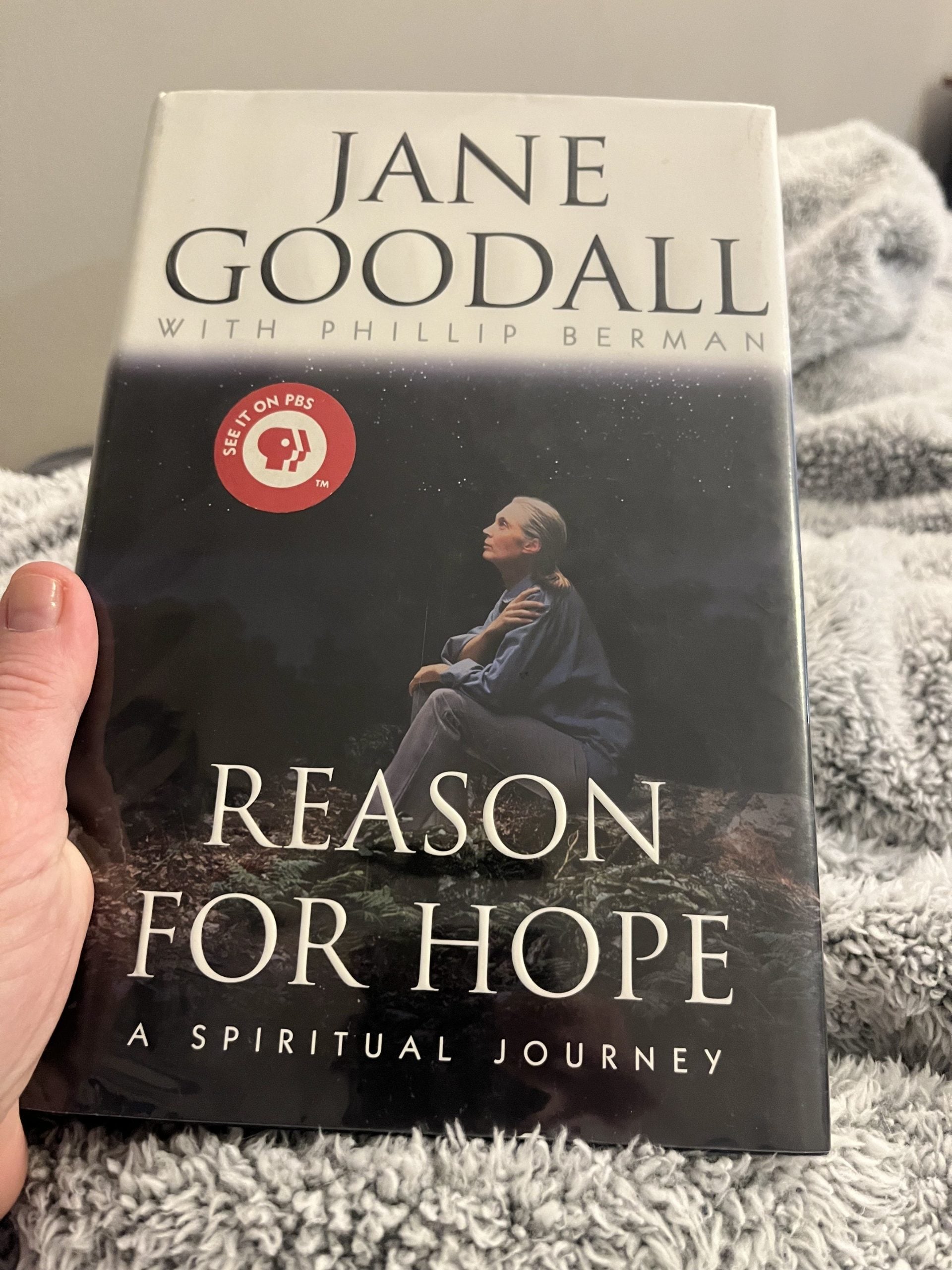
When I first read Reason for Hope by Dr. Jane Goodall, my world felt unsteady.
My daughter had just been diagnosed with autism, and the life I thought I understood suddenly shifted.
I didn’t know it then, but that book was about to hand me a framework for how I would live my life—quietly, persistently, and with reverence for every small, sacred moment.
The Lesson Beneath the Science
Jane didn’t write like a scientist trying to prove something. She wrote like a human being trying to remember something—that every life has meaning and that paying attention is its own form of prayer.
At the time, I was drowning in data, therapies, and uncertainty. But her words reminded me that observation isn’t passive. Watching with love—the way she did in Gombe—is action. It’s how we learn, how we connect, how we heal.
That became my guidepost with my daughter. I learned to watch before labeling. To listen more than I spoke. To notice what lit her up instead of what set her apart. Jane’s way of being—still, patient, deeply curious—became my own kind of therapy.
Kindness as a Way of Seeing
Years before reading her book, I met Jane Goodall at a youth leadership conference in Switzerland. After her powerful presentation, I was blessed to spend an afternoon talking with her and hiking through the Alps. She was calm, unassuming, and profoundly present—the kind of person who didn’t need to fill the silence, because she understood its importance.
That day stayed with me.
Reading Reason for Hope years later brought that memory back like sunlight through fog. I realized her kindness wasn’t performative—it was her natural state. She lived what she believed: that everything is connected, that love and observation are intertwined, and that true power comes from gentleness.
Her presence in those mountains became a memory I didn’t know I’d need later—a reminder that grace doesn’t announce itself. It simply exists.
Hope in the Hard Places
When my daughter was first diagnosed, the world tried to hand me fear.
Jane’s book handed me faith.
Not blind faith—earned faith. The kind born from watching nature survive the unthinkable and still keep growing.
Her words reminded me that hope isn’t naive. It’s a daily practice. It’s the quiet choice to see possibility where others see limitation. It’s showing up again and again, even when you’re exhausted, because life—all life—is worth showing up for.
And that’s what I did. That’s what I still do.
Why Her Legacy Lives in Me
Jane Goodall taught the world that we are not above nature—we are part of it.
She taught me that empathy is the highest form of intelligence.
Her framework became my own: watch, listen, learn, adapt, protect, and love.
It’s how I’ve raised my children, built my home, and fought for the kind of world she believed was possible.
Because of her, I don’t see my daughter’s neurodivergence as a deviation from the natural order—I see it as part of the stunning diversity of it.
A Shared Vision of Hope
Now, years later, I’m married to a man who shares that same reverence for life—for the earth, for animals, for healing what’s been broken. What began as a personal philosophy has become a shared mission. Together, we ask the same question Jane once did:
What kind of impact do we want to make with the time we’re given?
It’s not about changing the entire world. It’s about tending to our corner of it—with presence, love, and purpose.
Every walk we take through the woods, every conversation about the interconnectedness of things, every act of care—it all traces back to her influence. Jane’s legacy didn’t end in the forests of Gombe. It lives on in the way people like us choose to live—in harmony, with hope as both compass and currency.
The Reason for My Hope
Jane once said, “Every individual matters. Every individual has a role to play. Every individual makes a difference.”
Those words found me when I needed them most—and they never left.
I like to think that’s what she wanted: for her readers to find their own “reason for hope” and carry it into whatever forest life led them to.
For me, that forest was motherhood.
For us, it’s marriage—wild, imperfect, and rooted in love.
And like Jane, we’ve learned that the best way to change the world is to love it fiercely, one being at a time.
~
 Read 1 Comment and Reply



Read 1 comment and reply