
 Share on bsky
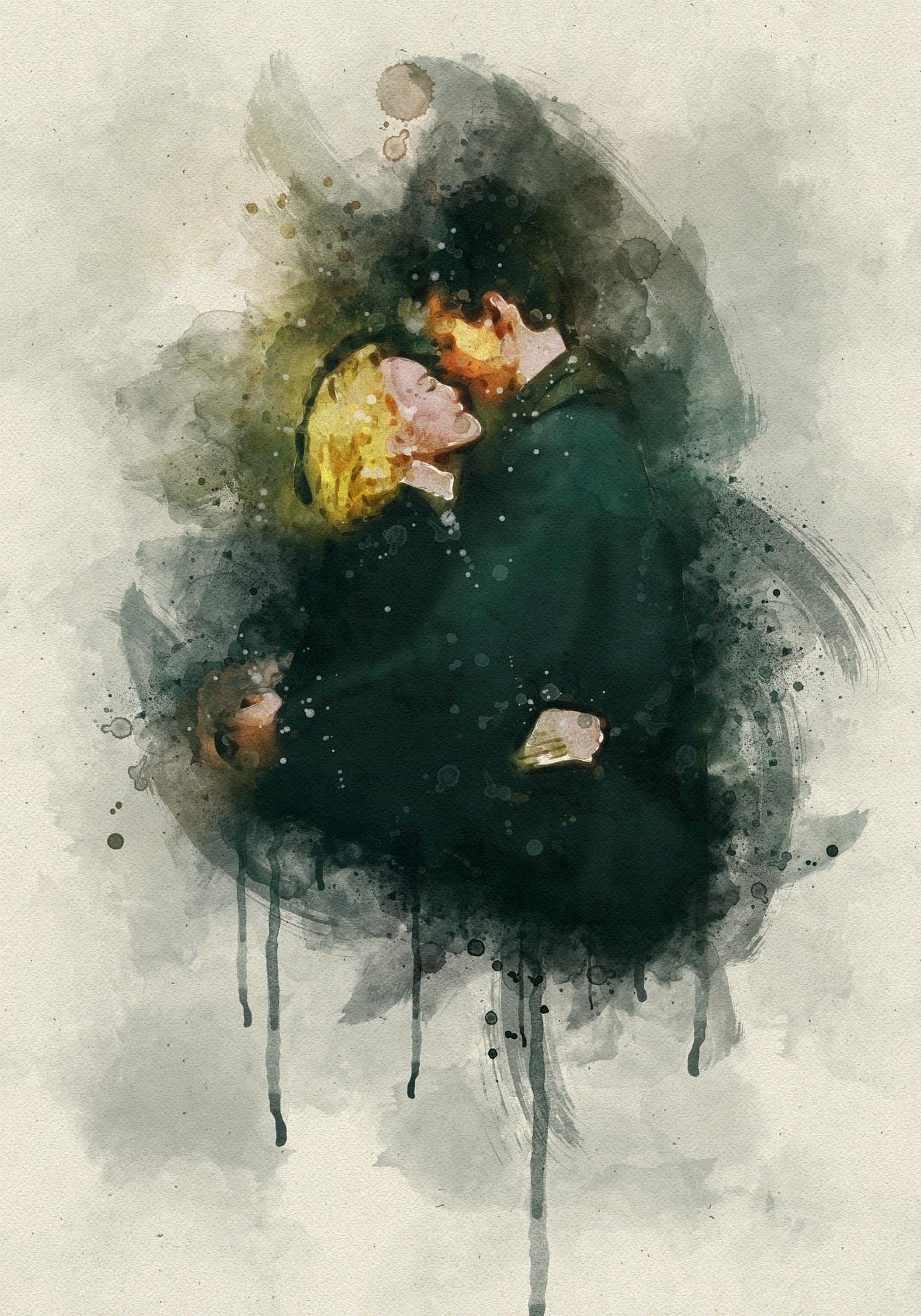
“Vulnerability minus boundaries is not vulnerability.” ~ Brené Brown
~
Have you ever been with someone who gaslights you, invalidates your feelings, plays the victim, and somehow leaves you questioning your reality?
Or maybe you’re the one who’s always available, always understanding, always empathizing, but deep down you feel unseen, unheard, and emotionally exhausted. You keep bending, explaining, accommodating, all while ignoring a quiet voice inside that keeps trying to tell you that something doesn’t feel right. You continue to silence it, hoping love or patience will somehow fix things. But nothing gets fixed. In fact, it continues to get worse until you reach a breaking point.
That’s the thing about the empath-narcissist dynamic—it doesn’t start with chaos; it begins with chemistry. The empath feels needed. The narcissist feels admired. At first, it’s intoxicating; the connection feels fated, almost cosmic. But slowly, what began as care turns into control. The empath gives more, the narcissist takes more, and soon the empath is trapped in a loop of over-understanding and under-receiving. The more they love, the less they’re loved back.
And the thing is, this dynamic isn’t limited to romantic connections. It can show up anywhere—between friends, colleagues, even family members. You might find yourself walking on eggshells around a parent who dismisses your feelings, or constantly explaining yourself to a friend who always turns the conversation back to themselves and you’re left feeling small, invisible, and non-existent, and when you try to highlight or raise your concern, you’re met with endless rounds of defensiveness, invalidation, and even manipulation, and it may not always be loud or obvious. Sometimes it’s subtle, disguised as “concern” or “honesty” or “that they were doing it for you” and you can see or sense that there is nothing about you in the whole dynamic. Whatever the situation may be, the emotional pattern is the same: one person gives endlessly, the other takes without accountability.
Sadly, most empaths don’t realize that their sensitivity, the thing that makes them compassionate and understanding, can also make them vulnerable. Their lack of boundaries gives the narcissist an upper hand. Their guilt for saying no, their fear of being selfish, their need to be understood—all of it becomes fertile ground for manipulation.
And the paradox is that empaths don’t attract narcissists because they’re weak. They attract them because, on a deeper level, these relationships hold the exact lessons the empath needs to learn. The narcissist becomes the mirror that cracks open what’s been suppressed for years—anger, resentment, and the deep exhaustion that comes from chronically abandoning oneself in the name of love. As dramatic as it may sound, it does take a narcissist to break open an empath, force them out of their default and truly step into their own power.
Often the narcissist-empath dynamic plays out like this:
>> The empath over-functions, taking responsibility for every conflict, while the narcissist under-functions and blames.
>> The empath explains, justifies, and apologizes while the narcissist deflects, denies, twists, or becomes the victim.
>> The empath walks on eggshells and the narcissist thrives on control.
>> The empath confuses intensity for intimacy while the narcissist uses intensity to manipulate and hook.
And over time, the empath begins to shrink, forgetting who they were before the constant chaos and emotional turbulence. They become their own shadows, constantly wondering what happened, blaming and gaslighting themselves into believing that they are the ones who are screwed up. Well, being in any kind of relationship with a narcissist fries your brain and soul at all levels.
Sadly, what many empaths don’t see is that this dynamic often has roots in their past. Most empaths grew up in environments where they had to manage other people’s emotions—parents, siblings, authority figures. They became the peacekeepers, the fixers, the emotional sponges because it was necessary for them to survive, and in the process of keeping the peace, managing others, they never got a chance to feel that they matter too.
They learned early that love often comes with conditions: be good, be quiet, don’t upset anyone. That conditioning made them deeply empathetic but also hyper-attuned, hyper-sensitive, and over-responsible for everyone’s feelings. And so, as adults, they keep repeating the same pattern (i.e. trying to earn love by taking care of others, even at the cost of themselves).
But the real work for an empath isn’t to love harder; it’s to tone down the hyper-attunement and turn that empathy inward. It’s to stop confusing emotional labor with love and to stop mistaking chaos for connection. Real emotional intelligence isn’t about mindless giving or constant pleasing. It’s about discernment (i.e knowing who deserves your softness, when to pull back, and what peace costs you when you keep choosing people who don’t choose you back).
What every empath then needs to learn, no matter how hard or impossible it may feel is to:
>> Honor their boundaries without guilt and with full awareness that the narcissist is going to find gaps and loopholes to have the upper hand. Protecting your boundaries is not about getting into lengthy explanations or debates but simply being aware of them in your mind and enforcing them minus the verbal or emotional drama.
>> Stop rescuing people who aren’t willing to rescue themselves.
>> Understand that compassion without clarity is self-betrayal.
>> Recognize that love without respect is manipulation in disguise (something narcissists are great at!).
And to remember that sometimes, walking away is the most loving thing you can do for yourself. This is perhaps the hardest thing for an empath to do because their love, care, compassion comes in the way. Yet, it is needed because not everyone deserves your time, effort, energy, explanation, or empathy, especially someone who’s proven, time and again, that they only care about their own perspective.
“It is necessary, and even vital, to set standards for your life and the people you allow in it.” ~ Mandy Hale
Every empath, at some point, has to learn to retreat, to stop operating in survival mode all the time and make their life revolve around other people’s, to stop explaining themselves to people committed to misunderstanding or not understanding them at all.
Empathy without boundaries is self-betrayal, but empathy with discernment—that’s power. The true journey of an empath isn’t about fixing others; it’s about coming home to themselves. It’s about understanding that their need to fix, please, give, and compensate are survival mechanisms that prevent them from seeing who actually needs saving versus who doesn’t.
It is about learning that love doesn’t mean losing yourself, and peace doesn’t mean people-pleasing. It means standing tall in your truth, even if it means standing alone because this is when an empath becomes truly empowered—when they learn to use the power of discernment to stand their ground and not let the world take advantage of their sensitivity.
If this resonates with you, then know it’s time to turn inwards and break those patterns that are keeping you trapped.
Come home my friend.
“One of the greatest regrets in life is being what others would want you to be, rather than being yourself.” ~ Shannon L. Alder
For more awakening:
 Read 15 Comments and Reply




Read 15 comments and reply