 Share on bsky
December 7, 1941—a day that will live in infamy, killing 2,403 service members and wounding 1,178 more.
Six American ships and 169 Navy and Army Corps planes were destroyed. The surprise attack on the Pacific Fleet at Pearl Harbor, a United States naval base on the island of Oahu in Hawaii, resulted in the U.S. entering World War II. The U.S. declared war on Japan the following day.
The Pacific Fleet lined what was proudly, and affectionately, known as Battleship Row. The battleships included USS Arizona, USS Oklahoma, USS West Virginia, USS California, USS Nevada, USS Tennessee, and USS Maryland. Times were tense for our country. The world was entangled in a conflict that involved much of Europe. The British and Russians struggled against the German Reich, while the U.S. remained neutral, refusing to enter the war. Despite suspicions that something was percolating in the Pacific, there didn’t seem to be any fear or major concern—which left Battleship Row vulnerable, unprepared for an attack of any kind.
On the morning of December 7, 1941, military personnel routinely started what was to be a day of relaxation. Some readied for church services and some were eating breakfast while others were fast asleep. Small groups prepared to head to Waikiki in Honolulu where they would soak up the sun and frolic on the beaches, or visit the local hot spots, while others spent quiet moments writing letters and Christmas cards to family and friends on the mainland. It was tranquil, and calm. Then, at 7:55 a.m., the first bombs hit without warning. There were deafening explosions, torpedoes bombing, continuous gunshots, the angry roar of Japanese aircraft, and raging fires from oil spills. Terrified yet courageous American servicemen and women immediately jumped into action as chaos erupted. They didn’t even have a moment to process what was happening, but they knew one thing for certain: we were at war.
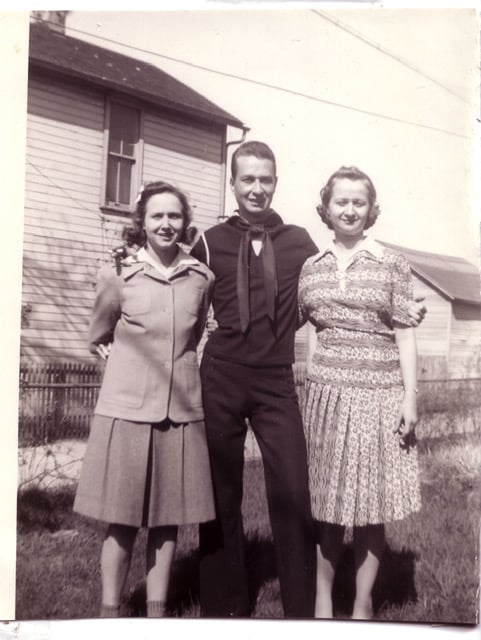
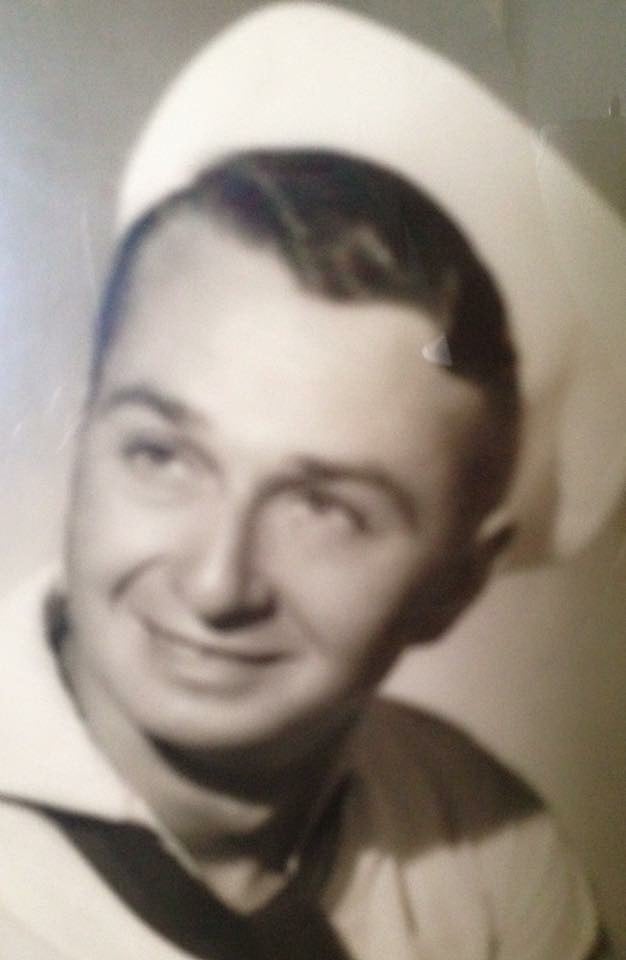
My grandfather, Ken Kisker, was serving as a Gunner’s Mate on the USS Nevada, moored directly behind the USS Arizona. He was a small town boy from Ohio who enlisted in the service at the tender age of 17, an innocent young man eager to serve his country and unfazed by any danger that may lie ahead. Ken, my Papa, had turned 18 on September 8, 1941, just months prior to the attack on Pearl Harbor.
The USS Arizona was sunk during the attack and miraculously, thanks to the quick thinking and action of the leadership and crew, the USS Nevada was the only ship to get underway. She was targeted by more than a dozen dive-bombers as she made her way through the devastation, intentionally running aground and beached at Ford Island where today, you will find a memorial erected in honor of her, and those aboard who were lost on that tragic day.
Papa wasn’t a talker, so we didn’t hear much about his time in the service, only occasional bits and pieces. What he recalled from the attack was being found on the beach where that memorial now sits—burnt, semi-conscious, but alive. A kind family had picked him up and put him in their station wagon, transporting him to Tripler Hospital. He couldn’t recall their faces, and his only distinct memory was inhaling the scent of a new car as he traveled across the island in urgent need of medical attention.
My grandfather went on to serve in all the major battles of the Pacific, earning him the Bronze Star, Purple Heart, and numerous other campaign medals, awards, and commendations, and he continued to serve in the U.S. Navy for 20 years.
My grandmother passed in 2000 and at that time he made the decision to revisit Pearl Harbor 59 years later with me as his companion. Up until this year, I had believed in what he told me, that he was curious to see the island all those years later. As a volunteer for Honor Flight New England and other veteran organizations, I’ve listened to Pearl Harbor survivors tell their stories. I’ve held the hands of those who have endured horrors that no human being should ever have to experience and held space for those who chose to open their hearts while tears fell from their eyes—releasing the immensely heavy burdens they carried throughout the course of their lives. I’ve talked with family and friends, active military and veterans, witnessing the courage it took to unleash their pain.
As I reflect now, I wonder if my grandfather may have been on a mission, one that I will never be privy to. Maybe he was seeking peace or healing—to close a door in his heart or mind that was left wide open for many years. I was by his side as he revisited what had to be an extremely painful and complex past. I was with him as he cajoled with a USS Arizona survivor, observing and listening intently as they exchanged stories about that fateful day. That survivor vividly recalled the USS Nevada getting underway, passing by the USS Arizona when Battleship Row was ablaze, and saying to himself, “Where the hell does she think she’s going?!” What an honor it was for me to share this with my grandfather, cherished memories of a man who was highly respected and deeply loved.
If you ask a child or young adult today about Pearl Harbor, most haven’t a clue. History seems to be taught differently, and many will never truly know, or understand, the sacrifices our veterans made for this country. It is up to us to keep these stories alive. It is up to us to honor our veterans and support our active military. It is up to us to remember Pearl Harbor.
In memory of Chief K. K. Kisker, GMC, USN, Retired
~
 Read 1 Comment and Reply



Read 1 comment and reply