

 Share on bsky
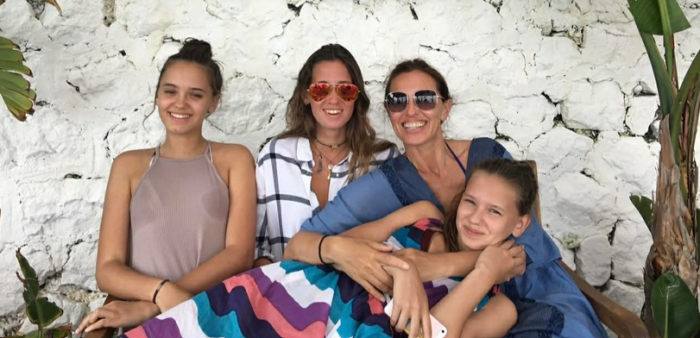
I can only meet you as deeply as I’ve met myself. You can only meet me as deeply as you’ve met yourself.
I finally watched the TV series “Adolescence” over the weekend, and it’s been haunting me.
Not because of what the teenagers were going through—as painful as that was—but because of the adults’ helplessness in meeting their children.
The distance between parents and children is increasing with every generation.
Our children live in a world that the parents often do not understand. It is shaped by pressures and complexities we never faced and don’t know how to navigate.
Many parents live in overwhelm from the demands of adult life and simply do not have the emotional capacity required for sustained connection, for building trust, and for rupture repair.
Teenagers are often left to deal with emotions they do not have the language or containment for.
Adults, often absent due to their own limitations, unknowingly contribute to the breakdown of relating.
This is not for the lack of love. It’s lack of capacity.
More often than not, adults behave as “unfinished” adolescents themselves—emotionally frozen, avoidant, repeating patterns unconsciously, often stuck in their own bubbles of shame and inadequacy.
We cannot model to our children skills we do not have.
When my daughters were teenagers, we had our share of difficulties. I remember how painful it was to face their struggles.
I could not be with them in their pain, because my reactions to their pain were impossible to be with.
I often found myself on the defensive, experiencing every difficult episode as my own failure as a parent. The sense of helplessness, the inability to protect my children from life, was excruciating.
At times, I dissociated. At times, I said things that were more about my own suffering than about being with theirs.
I couldn’t meet them where they were because I hadn’t yet met myself.
When attunement is absent, safety is threatened. When protection expresses itself as policing and instilling fear of the outside world, guidance does not empower—it disconnects us from ourselves.
My own parents’ fear, shaming, and judgment not only created disconnect between us, it disconnected me from myself.
The first person with whom I felt seen was a teacher who believed in me. He saw something in me that my worried-about-survival parents couldn’t and encouraged me to dare to follow my dreams.
I felt connection from being seen as capable. This teacher saw parts of me that were overlooked in my home. That is why we need a village to thrive.
Our helplessness is inherited.
Many of us were taught compliance instead of dialogue. We were punished for big feelings and rewarded for self-betrayal. We learned to survive by abandoning parts of ourselves, not by learning to relate to them.
These difficulties in our relationships are not individual failure.
It is a systemic failure of care.
Relational systems collapse when adults are unable to metabolize their own emotions. What remains unprocessed does not disappear—it gets passed on.
When we do not spend time with our own emotions, we misinterpret emotional signals of others:
>> Rage as disrespect
>> Withdrawal as uncaring
>> Silence as compliance (or threat, depending on our own wounding)
>> Sexuality as danger
We ask, “What’s wrong with you?”
Instead of, “What are you trying to protect?”
And this dynamic doesn’t end in adolescence.
We see it reenact itself in adult relationships.
Adult relationships don’t break down because of conflict. They break down because of emotional helplessness—when intensity exceeds capacity.
Helplessness sounds like “I don’t know what you want from me.” It looks like withdrawal, shutdown, over-explaining. Defensiveness is disguised as logic, and therapy-speak is used to avoid vulnerability.
Insight or technique alone will not heal this pattern.
What heals is building capacity—the ability to remain present with emotion as we are feeling it. Being with the discomfort without jumping to fix or flee. By admitting when we simply do not know the answer. This is how we choose relationship over self-protection. This is how we stay in relationship—with others and with ourselves.
This is the reparenting that heals—whether done with our outer children, inner child, or with other adults.
What “Adolescence” ultimately reveals in the final episode is not the lack of love in our relationships, but a failure of care rooted in lack of self-awareness and unacknowledged helplessness.
Repair begins when we are willing to stay at the edge of our own limitation and say—to a child, a partner, or ourselves:
“I don’t understand yet, but I’m not leaving. I’m right here, and together we will figure this out.”
~
For more paradigm-disrupting insights about relationships, join my mailing list here.
Learn how to build healthy relationships based on self-awareness and attunement. Book your free introductory conversation.
~
 Read 2 Comments and Reply





Read 2 comments and reply