
 Share on bsky
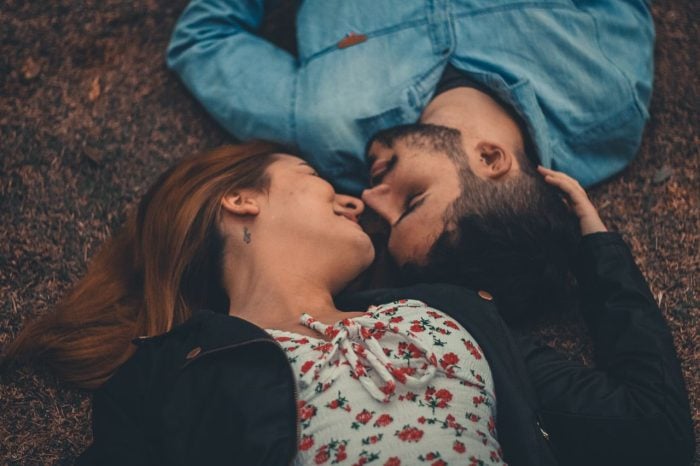
It was only through the freedom to experience the full extent of polyamory that I discovered the beauty of monogamy.
As soon as I discovered the existence of nonmonogamy, I felt like I had always been polyamorous.
In my earliest relationships, though, I practiced serial monogamy. I would fall in love hard with someone, be with them for a couple years, and then fall in love with someone new. The issue was, I would still be in love with my established partner. I wondered why I couldn’t just have a relationship with both of them. But this wasn’t the norm back then. Not surprisingly, my partner always broke it off when they found out I was in love with someone else. I was brokenhearted at the loss, even while giddy with excitement at the new relationship. These two simultaneous emotions are a common experience in polyamory, as one discovers new relationships while breaking off others, regardless of how many partners one has. The ebb and flow of relationships is a staple of polyamory.
Though I’m not proud of how I did relationships in my 20s, I’m forgiving of it—as we all have to learn how to relationship. Unfortunately, in our society, we don’t learn this in school. As I got older, breaking hearts became a thing I could no longer tolerate. However, I still found myself interested in people outside of my relationship. I yearned to connect and get to know someone intimately—how they lived their life and what their hopes and dreams were. I wanted to devour the spirits and minds of many people. Monogamy started to feel like a prison to me.
I was a world traveler and a “free spirit.” This made it more tempting to experience all I could in the world. I might travel to a new country and meet a local who I would spark up a relationship with for the duration of my trip. This was nice because not only would I have someone to travel and share experiences with, I would also have someone who was familiar with the country to show me around—getting a genuine experience of the culture and way of life of the people there. At this point, polyamory was still not a concept that was well known. Maybe people practiced it, but the concept wasn’t mainstream yet. Though the word polyamory was defined in 1990, it didn’t get added to the dictionary until 2006. And I didn’t learn what it was until 2017.
However, when I did learn what polyamory was, it immediately clicked. In a eureka moment, I thought, “I have always been polyamorous!” And from that moment on, I vowed to start practicing ethical nonmonogamy.
It wasn’t an easy road, although the switch from monogamy felt natural in many ways. Luckily, I lived in a city where many were practicing some form of nonmonogamy. Though the transition felt natural, there was much I had to learn, or rather, unlearn. The unlearning of possessiveness and jealousy is no joke. Pair that with good communication, radical honesty, and the ability to juggle multiple relationships with different kinds of humans and all the emotions these relationships come with, and you have yourself a great example of the perfect poly person.
But polyamory wasn’t perfect. Yes, I enjoyed the freedom to explore what and who I wanted, along with the challenge of remaining ethical in a world fraught with immorality and deceit. So many of the poly relationships I witnessed around me were scarily dodgy. People cheated, broke agreements, treated partners terribly, and ended up breaking up with their partners anyway. I was good at poly in many ways, but fundamentally maybe not so good at it. Sadly, I witnessed people using polyamory to discard their longer-term partners for something shiny and new. After all, it’s difficult to give adequate attention to someone you’ve been with for a while when you’re in the throes of what they call NRE (new relationship energy) with someone else. And I’m sorry to say I wasn’t great at this aspect of poly either.
I’m not saying polyamory cannot work. I do know a polycule (group of polyamorous people all dating or friends with each other) that has been successfully working for years. But most of the poly relationships I saw around me were crumbling. The more poly I became (as I took on more partners), the more I realized how impossible a successful poly relationship felt.
I thought poly meant I could do what I wanted whenever I wanted it, but in some ways it was even more restrictive than monogamy because of the number of partners you need to care for, discuss things with, and make agreements with. Not to mention the occurrence of partners experiencing jealousy and needing extra attention. Polyamory does not mean the absence of jealousy, only the ability and skills to process it when it happens. I realized I was feeling large amounts of jealousy when my partners started dating others, made worse when they weren’t able to give me the time I needed to process it with them (them being immersed in NRE as well)! It all started feeling too complicated. No matter how you look at it, introducing others into your relationship introduces complications into your relationship.
When I met my current partner, everything changed. He was so different from anyone else I had ever met—a secure, emotionally mature man who I fell head over heels for. All the therapy and work I had done on myself throughout my poly journey had culminated in me being able to meet this person where he was, in a secure, healthy bond. I couldn’t have done it had I not learned crucial relationship skills during my transition to poly.
I soon made the realization that I wanted free agency to follow this relationship without any rules or restrictions—without any agreements I might have with other partners holding us back. I wanted to do whatever I wanted with this man, whenever I wanted. And that meant monogamy, or something close to it. Luckily, I was in a place where my other relationships were coming to a natural close, and shortly after I met him, I was able to transition out of polyamory with him. And a couple of years in, it still feels like exactly what I want.
I’m not sure I’ll ever believe in complete 100-percent monogamy, if it follows the traditional implications that we can’t even look at or fantasize about anyone outside of our relationship. And definitely not if we can’t have friends of the opposite sex, or there are limits on us talking to people of the opposite sex (and believe me, I’ve seen a lot of this in traditional monogamy).
In my relationship, I can talk with whoever I want, keep my best friends who are guys, and even flirt with others (to a degree). There’s a definite line I will not cross. I will not lead people on, or make them think I’m single or want to fool around with them. I won’t strike up a friendship with someone I know I’m attracted to. I won’t invite complications into my relationship. My partner and I are free to feel like ourselves in the outside world, free to share fantasies with each other, and free to befriend anyone of any gender. We have a foundation of trust, practice radical honesty, and can have the difficult conversations that come with a healthy relationship. We’re even open to having the poly conversation one day if it comes up. That’s what ultimately made me feel safe with him as a monogamous person wanting a monogamous relationship with me. If I should ever feel like I want to branch out again, or feel like I’m imprisoned, I can bring it up and discuss it with him, even though it might feel painful or hard. But right now, I welcome the challenge of not opening myself up to other romantic relationships—something I’ve never felt welcoming of before.
It doesn’t feel like a prison—it feels like a safe space where I can set down my worries and be my full self while receiving and giving the love I’ve always desired in a relationship.
~
 Leave a Thoughtful Comment





Read 0 comments and reply